
Prevention and Political Negotiations
-
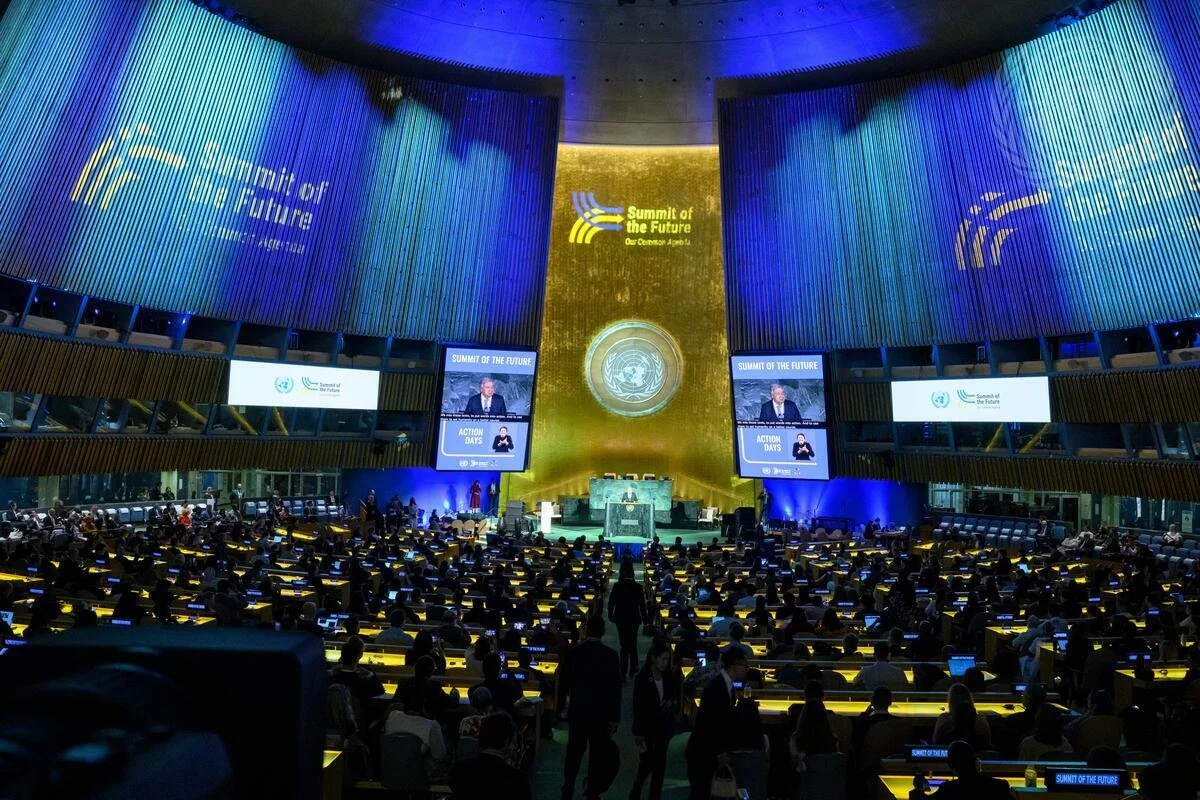
Why Should National Prevention Strategies Be in the Pact for the Future?
By Céline Monnier (March 2024)
Making progress on prevention has been a priority of the United Nations secretary-general (SG).
But difficulties have emerged in implementing the agenda from member states pushbacks due to fear of intervention and stigma as well as a general sense of confusion as to what prevention means in practice.
In his New Agenda for Peace, the SG addressed these concerns by recommending all countries to develop national prevention strategies and for the United Nations to provide relevant support. But ill-designed strategies can also be ineffective and do harm. This policy brief unpacks how member states can use the prime opportunity afforded by the Summit of the Future to significantly advance the prevention agenda by embracing this call for national prevention strategies and adopting an evidence-based approach for more effective prevention efforts.
UN Photo/Loey Felipe
-
Four reasons why the New Agenda for Peace should focus on nationally led violence prevention strategies
By Céline Monnier (October 2024)
The New Agenda for Peace is a key opportunity to give new momentum to nationally led prevention strategies. This policy brief looks at how these strategies are fertile ground to make progress on the UN prevention agenda for four reasons.
First, in the current divided geopolitical context, nationally led prevention strategies benefit from strong support among member states across these divides
Second, from a technical perspective, they are essential to reduce internal violence.
Third, nationally led violence prevention strategies are not a new approach, but build on efforts that already take place in all countries.
Lastly, the New Agenda for Peace is a good opportunity to focus on the nationally led prevention strategies because the UN is well-placed to help member states to address the main challenges that hinder progress on such strategies, namely national actors’ lack of cognizance regarding the benefits of nationally led prevention strategies; the lack of technical expertise to navigate the complexity of setting up such a system; and the lack of funding to develop a strategy.
UN Photo/Eskinder Debebe
-
The New Secretary-General Report on Peacebuilding and Sustaining Peace: Prevention Back on the Agenda
By Paige Arthur, Céline Monnier and Leah Zamore (September 2020)
Against the backdrop of the COVID-19 pandemic, the newly released secretary-general’s report on peacebuilding and sustaining peace contains, as usual, a wealth of examples of the steps that the United Nations (UN) system is taking to implement the sustaining peace resolutions. It also suggests a welcome and surprising finding: the conflict prevention agenda—once thought to be on life-support at the UN—has found new vigor.
This briefing examines the new report, finding that it moves the prevention agenda forward in several key respects, from deepening political buy-in among member states and partners, to a greater embrace of conflict-sensitive approaches in the field. The briefing also identifies key opportunities for prevention to take root in the UN’s practice—including continued strengthening of expertise on prevention; deepening partnerships with the IFIs; leveraging links with violence reduction initiatives, especially relating to SDG16; focusing on area-based approaches to address multiple risks; and more action on humanitarian-development-peacebuilding nexus approaches.
UN Photo/Loey Felipe